Out from behind the curtain

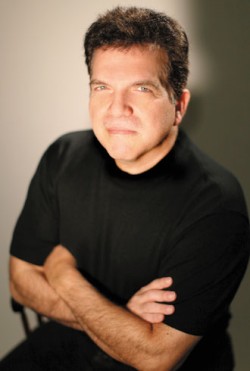
Meet my site administrator Jenny

Much like the wizard stepped out from the curtain in The Wizard of OZ, now it’s my chance to do the “big reveal” here at “It’s Only Fiction ‘til it Happens.” 

Why you ask?  Well, it’s to give you easier access to discover what Tom’s doing and how to you can be apart of it.  

Don’t Fall Behind

The blog is the place to dig deep into the “Wild” Bill Hiccock thrillogy and the politically faced-paced, techno charged world Tom created. Access trailers of The Eighth Day and The Hammer of God or head on over to the store and purchase the books at Amazon, B&N, or iTunes.  

But it’s 2014, and everyone wants more, more, and (let’s face it) a little bit more. “Like”-ing Tom’s Facebook Page gets you unlimited access and “cool” freebies.  You can sign up for his newsletter, learn about giveaways, and get a preview of The Eighth Day, that’s the first 10 chapter for you–FREE. Got questions, want to know what Tom’s doing next, or just want to say hello–follow Tom’s Twitter or tweet @tomavitabile.  

But his social circle doesn’t stop there (he is the modern Renaissance Man after all). Venture to The Story Plant where Tom can often be found guest blogging.

The Secrets Out 

For the “newbies” out there looking for a new emerging author, check out these reviews at Goodreads and Amazon.  

‘The Hammer Of God’ is a rip-roaring thriller that I simply couldn’t put down. A mixture of plausible and implausible elements results in a gripping thriller that doesn’t let up until the final page .

-Wayne McCoy (Goodreads)

Tom Avitabile is a new author who I recently discovered. I read his first novel and thought it was a very good debut novel. I just finished The Hammer of God and could not believe what a great writer Mr. Avitabile is becoming. This book grabbed me from page one and just got better as it progressed. The author is apparently privy to all sorts of insider information about the intelligence community and high tech. I highly recommend this book to all thriller fans.”

-Fair Reviews (Amazon)

If you haven’t been following the blog closely, the highly anticipated conclusion to his “thrillogy’, The God Particle, is coming July 17th.  Check out the mini trailer below.  You can also expect more from Tom in the fall when The Devil’s Quota storms in.

An Industry Veteran Reflects On Effective Mentoring In Times Of Change

I’m very pleased to re-blog Lou Aronica’s “Soapbox” piece for Publishers Weekly. Lou Aronica was my mentor and is the person who is solely responsible for me becoming an author.  But it wasn’t until I read this piece that I discovered how I was the “beneficiary” of a long line of paying it forward.  -Tom Avitabile 

How to be an Effective Mentor in Times of Change

By Lou Aronica
 

20943-v1-250xI’d only been in publishing a few years when the great Ian Ballantine engaged me in conversation and suggested, in his signature circuitous fashion, that he was willing to mentor me. Ballantine, the guy who brought paperbacks to America, wanted to mentor me—the guy who brought tea to my boss. I took him up on this instantly, beginning one of the most fulfilling and formative relationships of my life.

Mentoring has always had a disproportionately important place in the book business. Because feel and instinct have consistently been more important to book publishing than hard analysis—past numbers and consumer tendencies have rarely been a useful indicator of future performance—it’s been important for each generation to pass down a nuanced understanding of our industry to the next. If Ian hadn’t taught me everything he could about paperback publishing, working with writers, and developing a distinct vision in the marketplace, I’d probably be selling carpet now.

To this day, I still marvel at being blessed with such a generous mentor. In truth, I’ve had more than one. Irwyn Applebaum taught me how to put a list together. Linda Grey showed me how to dig deep into a manuscript. Ray Bradbury taught me more about writing than he ever knew, because I never revealed to him that I envisioned a writing career for myself—a career that has led to 18 books and counting. Given these remarkable gifts from people with huge talent, I’ve always been committed to paying it forward. Often, this has simply been a matter of being willing to dedicate my time to nurturing others. I find people who show a genuine interest in the business and share with them my observations, my methods, and the lessons of my experience. In recent years, though, I’ve faced a question that wasn’t been particularly relevant before: how do you mentor when your industry is undergoing enormous change?

It seems to me that if you’re serious about mentoring, you can try to answer this question in two ways. Obviously, one approach is to attempt to stay on top of the change as much as possible. Those you’re mentoring can help with this. In a recent book, I wrote about reverse mentoring. This is where the relationship maintains the traditional elder-younger dynamic but switches at certain junctures. As publisher of The Story Plant, I’ve found it essential to stay current with everything affecting our business—social media, e-commerce, new forms of distribution, new clients, new consumer habits, etc. Often, someone I’m mentoring will have facility with a tool that I’m less adept at, but will lack an understanding of how it might apply to publishing. In these cases, the mentor-mentee relationship balances. I learn about something that I need to understand, and the person whom I’m mentoring learns how that thing is applicable to the industry.

kindle.booksA second approach is to convey to young publishers that consumers—who need to be at the center of the business model of any industry, especially ours—haven’t changed nearly as much as the world around them has changed. Readers might buy books from different venues and might buy them in different formats than they did five years ago, but there’s very little data to suggest that the reasons they buy books have changed. If this is the case, then the lessons learned years ago are not only still valid, but are potentially more valid now than before, because they counsel a degree of steadiness in the face of continuous change. One of the things I regularly talk about with young people in our business is the importance of not confusing the tools, devices, and delivery media with either the books themselves or the reader. If what we make in our industry is reading experiences, then those experiences are what we’re selling, and the reasons consumers want them should not be confused with the ways that they’re getting them.

It seems to me that, at this inflection point in our industry, we need to look forward and backward at the same time: forward to the tools and opportunities emerging with increasing rapidity, and backward to the universal factors that have always sustained the book world. It dawns on me that this approach has direct relevance to mentoring in an era of change. I believe that any mentor who takes the role seriously needs to help those he or she teaches to understand the enormous value of looking in both directions at once.

Lou Aronica is an author, editor, and publisher whose novels include Flash and Dazzle and the USA Today bestseller The Forever Year. He is coauthor with Ken Robinson of the New York Times bestseller The Element.


Brain function ‘boosted for days after reading a novel’

200066596-001

That was the headline above the by line by Tomas Jivanda in an article in The Independent last week.

He reported on a research study out of Emory University.  The essence of it is summarized in this sentence from the piece.

“Being pulled into the world of a gripping novel can trigger actual, measurable changes in the brain that linger for at least five days after reading, scientists have said.”

Here’s a new scientific postulate: Is the lingering effect enhanced and extended to say 10 or 20 days of mental optimization if the subject of said gripping novel is the brain itself?

Well, the world of my first, hopefully ‘gripping’ novel, was about the human brain itself.  It’s deep layers and the mapping of it. Therefore, if the average run of the mill novel with ‘great grip’ can increase your noodle powers for 5 days then certainly getting a grip on my first book, The Eighth Day, could prove to be mental Viagra.

As you know, a fancy-schmancy University like Emory has all kinds of funding for research projects, but here at The Avitabile Institute for Advanced Mental Studies, we’re asking for volunteers to read The Eighth Day and chart your increased mental activity in an effort to prove the above postulate. Just go to AmazonB&N, and iTunes and order the book. Then just let The Eighth day do its voodoo that it do so well.

Please post your results on AmazonB&N, and iTunes here. Your findings will be tabulated along with those of thousands of other participants and the results printed in the Journal of the American Mind in their March 2014 issue.

So be prepared for the increased and sustained mental proficiency and ecstasy this experiment may yield, but first a few words from the lawyer:

“The Avitabile Institute for Advanced Mental Studies, is not legally responsible for any costs incurred or psychological or medical side effects including but not limited to; euphoria, suspense, thrills, terror, tender moments, laugh out loud knee-slapping hijinks or any other symptoms associated in reading the author’s work. Participants will not be compensated for their contributions. They will however enjoy the gratitude of the author for their procurement of the work piece of the study, The Eighth Day.  The Hammer of God is also acceptable as a substitute.”

Social Security Disability Program

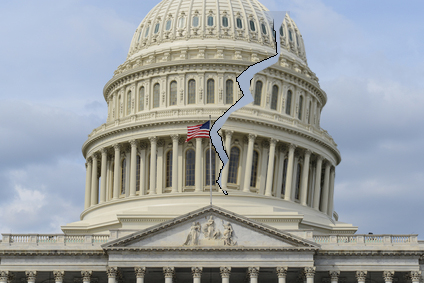
Capitol Hill Building in Washington DC

Got a scary note from someone whose identity I will solemnly protect.

Due to his vast time spent in the federal government, working as one of those nameless, faceless bureaucrats and rising to a very high position mostly by playing the game and not making waves, I asked him to do a pre-read of my 4th book, The Devil’s Quota.

In this book, some of the largess from the yearly government haul of our hard-earned taxes is funneled to fuel a private illegal enterprise by an entrepreneurial federal employee – who taps whatever is lying around the spreadsheet to fund it. In my book somewhere around $250k “falls off the federal truck” and seeds his shady endeavor, reaping an outrageous and illicit secondary personal income to his regular paycheck from the Federalis. I thought that was an indicting, criminally devious enough plot point.

His astounding response to my fictional criminal invention was “drop in the bucket”. The bucket being the Waste, Fraud and Abuse Vat that ‘overfloweth’ from the massive amount of money in the system that just can’t be accounted for. He then mentioned, in his letter of last week, the tremendous fraud and waste in misappropriating or inappropriate dispersal of millions of dollars just within one small part of government, the Social Security Disability Program (SSDP) of the government.

That “ooops” of misappropriation is somewhere between $2 and $3 billion out of the $10 plus billion that is disbursed every year by the SSDP. Keep in mind that it is only one department of one administration of the many agencies that make up the huge juggernaut that is the federal government.

Billions going out the door to unqualified recipients while millions of citizens who legitimately deserve these funds to survive, get the crumbs. Now, I am not one to rain on someone’s parade of ‘good luck’, and in my anti-establishment youth my opinion was, if you can game the system – then screw the government. If you can get away with a score like that, good for you. Everybody does it. It’s only the dumb who play by the rules. Of course that was before I paid taxes and realized the government was me, or at least co-funded by me, so screwing the government was a ménage à trois!

 Today, I personally know many people who magically became disabled when their 99 weeks of unemployment ran out. If one of you is reading this right now, don’t worry. I am not a rat. Someone, somewhere in the government is allowing them to reclassify, so I feel they are merely fighting to survive, trying to put food on the table. It’s hard to hold them responsible for utilizing a resource born out of either sloppiness or corruption at the federal level.

 But then I thought about what the Social Security Disability Program is in existence to do. It turned me around when I realized that many deserving citizens, who find themselves unable to work, are turned away because the money earmarked for their legitimate use is being diverted to those who otherwise have no disability.

To be balanced and fair to this issue, critics of the critics would say no one gets turned away. That’s because of the 12 million folks who are in the SSD Program, maybe 25 to 30% are in some way gaming the system. But, they point out, ‘no legitimate claim is denied.’ Somehow the folks who take comfort in this notion, must not pay taxes or they make a lot of money in some way from the SSDP.

So back to what started this all, my book and what I thought was a horendous dastardy deed by a criminal government employee. So I said to myself, I’ll change my book, I’ll expand the plot, I’ll point out this inequity, I’ll lead the reading public to the door of the Social Security Disability Program! I’ll up the ante from a mere $250,000 chicken feed theft to $250,000,000, which would be more in line with reality. I started contemplating my Pulitzer Prize acceptance speech.

“The power of fiction to right the wrongs of our non-fiction world, when those wrongs are so egregious that on the face of it they seem like the invention of fiction themselves…”     – Pulitzer Prize winner Thomas Avitabile

Then the CBS TV show 60 Minutes ran a story this weekend. Although my contact wasn’t in it, it was almost word for word his account of the dis-ability of the government to be accountable. I was scooped! So instead of polishing my Pulitzer I guess I’ll just go back to polishing my manuscript.

 P.S. If you want another little ‘Government Gone Wild’ chestnut to get your blood boiling, after two years of gaming the system (whether you are entitled or not), EVERYONE, even the scammers, automatically qualify for Medicare after two years on SSDP, no matter what age they are, just because they were on SSDP! If you put that in a book, the editor would cut it out as unbelievable.

Avitabile
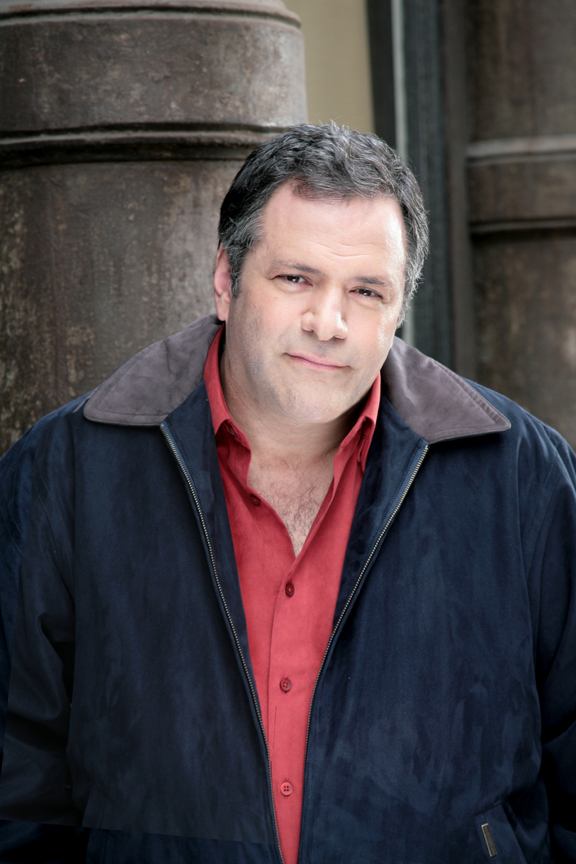
Tom Avitabile
https://tomavitabile.com/
tom@spadvertising.com

Guest Blogger Ethan Cross on The Evil That Men Do

An Exploration into the Minds of Serial Killers

Serial killers are like aliens among us.  They think and act in ways that most of us cannot begin to comprehend, which in turn makes them fascinating.  When we turn on the news and see headlines describing the deeds of a serial killer, we immediately wonder “How could a human being do something like that?” and “What drove him over the edge?”  When trying to unravel these mysteries, investigators often look to the person’s past.  They search for an event or series of events that led this seemingly normal person to their ultimate fall from the realm of the socially acceptable into the world of the criminally insane.  But then, we wonder if there is more at work behind these actions than a traumatic childhood or series of bad experiences.  Was this person born broken?  Are they evil?  Most researchers accept that the deviant behavior of serial killers is a combination of many factors.  When questioned about nature vs nurture, one psychologist asked, “Which contributes more to the area of a rectangle, its length or its width?”  And yet, there is no simple answer, and some maintain that the circumstances into which a person is born determines their personality.

In my novels, The Shepherd and The Prophet, I touch upon the concept of nature vs nurture as I place the reader into the mind of a twisted psychopath named Francis Ackerman.  Ackerman’s father was a psychologist who wanted to prove that he could create a monster by subjecting his seemingly normal son to every known traumatic event that had occurred in the lives of modern day serial killers.  His thinking is obviously flawed because by trying to prove his theories, he establishes that there must be something broken within himself that he could have passed onto his son, giving credence to the very concept he set out to disprove.  While this is only a small piece in the grand tapestry of the novel, it’s still an important factor in understanding the twisted thoughts and character of a man like Ackerman.

In a study conducted by the FBI, researchers found that 74% of the killers surveyed experienced some type of abuse, whether physical or psychological, during their childhood.  43% reported that they experienced sexual abuse firsthand.  The abused child growing up to become a serial killer has become a cliche within our society, and yet there is a definite link between abuse at a young age and violent behavior later in life.  However, the fact remains that most people who were abused as a child don’t grow up to become Ted Bundy, and there are many killers that had a normal childhood.  So, while abuse and circumstance is definitely a factor, there must be more behind the madness.

We like to think that we are the masters of our own fate, but the truth is that much of who we are was determined before we spoke our first word or even took our first breath.  The intricate make-up of our genes had already laid out a certain path before us.  We can overcome this and change our fate, but that doesn’t negate the fact that certain barriers or advantages exist from the moment of our births.  A five-foot-four man can play professional basketball, but he has a much greater barrier than someone born to be seven-foot-one.  And beyond the physical characteristics, there are certain mannerisms and behaviors that we seem to inherit as well.  Since my daughter was a tiny baby, she has tucked her thumb into her palm and held it with the rest of her fingers.  The gesture seemed strange to me at first, until I realized that I do that constantly.  She obviously didn’t learn this behavior from me, and it’s fascinating to think that such a small action could be coded within her genetic sequence.  It stands to reason that a person could be born with an inherited pre-disposition to violent behavior, but is there even more than genetics and circumstance at work?

There are also certain religious or philosophical issues to consider.  Is there an evil or negative force at work in the universe beyond what we can see and easily quantify?  These factors are often dismissed by the psychiatric community, but since most of us believe in some sort of higher power, we can’t help but wonder at the existence of evil.  Although this is an area that is even more difficult to study and classify, I believe it’s where the true key to deviant behavior may be found.  I believe that all serial killers, regardless of varying circumstance and genetics, share one common trait.  They all harbor a darkness inside themselves, a darkness that shines through in their terrible deeds.  But the truly scary thing is that I believe we all carry this darkness or capacity for evil to some degree, and this is where genetics, knowledge, and the events of our pasts come into play.  These factors contribute to our ability to hold the darkness at bay.  We’ve all learned from a very young age how to manage our impulses.  Otherwise, we would allow that sudden animal instinct of anger or lust to elevate into rape or murder and our society would quickly crumble.

I’ve always found this concept of darkness and the questions that go along with it to be fascinating.  Can the worst killer overcome the darkness and find some form of redemption?  Can they learn to control the darkness despite the barriers working against them?  What happens to a good man who embraces the darkness with the best of intentions under a banner of righteousness?  It’s these concepts, along with others, that I explore within the pages of my novels.

ETHAN CROSS is the International Bestselling and Award-Winning Author of The Shepherd, The Cage, Callsign:Kinight, and his latest, The Prophet–a novel described by bestselling author Jon Land as “The best book of its kind since Thomas Harris retired Hannibal Lecter” while #1 New York Times Bestselling Author Lisa Gardner said, “The surprises are fast and furious and will leave you breathless to read more.”

Don’t cry for me, Puerto Rico

Tom Avitabile | Don't Cry For Me, Puerto RicoI know that what I’m about to say is going to draw no sympathy, no empathy, no amount of concern from anybody, and that’s the way it should be. I’m at a wonderful, magical moment in the process of The Devil’s Quota, my fourth book. If you’ve been following the blog, you know that from time to time I’ve been trying to bring you, the reader of the blog (if I’m the blogger, are you the blogee?), into my wacky, arcane, never-been-done-before process of writing.

 Here’s another one: The good news about finally getting the first pass of The Devil’s Quota back from my editor is that it coincides with a holiday, and holidays usually coincide with me taking a trip which ultimately winds up with me under an umbrella on a Caribbean beach with a thick, four-inch spiral bound notebook of three-hole punched, 385 page manuscript. Oh, and a red pen.

 In the prima facie case of the ultimate beach read, while bikini clad Bunnies and really buffed Brads wave at some Steves and Bobs who are bobbing in the water, I sit in the shade under an umbrella, looseleaf across my lap, red pen at the ready, attempting to be an unbiased, unemotional, disconnected reader/arbitrator of that which I wrote.

 It’s an interesting process: That progress from the writing phase to the editorial stage acts as a kind of mental sorbet, cleansing the mental palate. This allows attacking the book fresh, and energizes me with very insightful and illuminating powers. The biggest advantage is the modality switch from the extreme high-definition quality of a retina display laptop to reading toner on paper. That, in and of itself, it is a transformational step.

 For someone born before the computer, who learned how to read on paper, there is actually a discernible difference. The skill, the comprehension and the “Oh geez, I didn’t notice that on the screen!” moments overtake you when you are actually holding the book. Somewhere in between, my “workday” on Isla Verde also has a Piña Colada (virgin of course, I’m working) and various friends and curiosity seekers stopping by, wondering why I’m sitting under an umbrella doing my homework when everybody else is playing.

Tom Avitabile | Don't Cry For Me, Puerto RicoI will come home from the Caribbean with not only sand in my bathing suit, but hopefully sand-sprinkled pages of a manuscript. I’ll shake it out—the sand, all those crazy knotted sentences, all those overused pronouns, all those not-defined-well set up scenarios and characters, all shaking loose with them—leaving only a pristine, perfect first draft which will then go back to my editor. As the shampoo bottle taught us: repeat, rinse, repeat.

 *Editor’s note: To that end, there will an Ethan Cross guest blog filling this space- enjoy.

Avitabile
Tom Avitabile
https://tomavitabile.com/
tom@spadvertising.com

Hold Page 1 Clancy Died!

Avitabile - Tom ClancyThe King is dead!

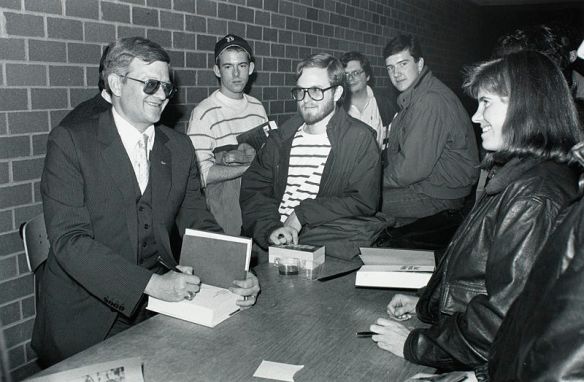
For myself and millions of others, Tom Clancy, was the King of the techno-thriller. I was brought into reading fiction by his excellent work. I have first editions of every one of his Jack Ryan series. But what I really got from Mr. Clancy was a reverence and respect for those who risk their tomorrows for our safety today.  Before The Hunt for Red October, Clear and Present Danger, The Sum of All Fears and the others, military heroes were mostly one-dimensional war-fighters. Clancy opened them up, made them regular people with a skill set to be respected and he gave them souls. Without overtly writing it out, he revealed the warrior’s code, he brought a level of admiration, professionalism and honor that filled in the outlines sketched by the likes of John Wayne et al.

Clancy also appealed to me because he was a master at explaining the technical on the way to laying the foundation for a heart-racing story.  Also because he was just an insurance salesmen fooling around with his kid’s video game and synthesized one of the greatest Naval techno-thrillers of all time.

His prescient detailing of a jumbo jet passenger plane being used as a guided missile years before 9/11 was the kernel at the heart of this very blog, “It’s Only Fiction `til It Happens!”

I have homages to TC throughout my work. Just short of plagiarism, my Dick Bridgestone, super-operative, who is a fierce warrior and expert spy, is kinfolk of John Terrence Kelly or as we know him, Clancy’s John Clark.

In fact, in my first book, I had my lead character, Bill Hiccock actually consult a best selling author on some “What-if” scenarios as he tried to figure out what the bad guys were up to.  With Clancy in mind, I set the meeting on a palatial mid-atlantic estate on the Chesapeake, replete with military artifacts and statues and hardware on the grounds.  I had him negotiating his “rate” as getting to fire off the 16-inch guns on the U.S.S. Iowa, his fall back position was if he could shoot off one cruise missile. Speaking as a “novelist” he gave my Professor Hiccock the novel idea which became the inciting element to his quest. My “Clancy” couched his idea in the phrase, “If I were writing the book I’d….”

Tom Clancy has achieved what many of us write for, immortality. Although he is gone, his work will never leave us.

God rest your soul, Tom Clancy.

Here’s the excerpt from The Eighth Day where I had Hiccock meet with Frank “Clancy” Harris:

CHAPTER 12 PEN AND SWORD

The exclamation “Pull!” was followed shortly by an ear-piercing shotgun blast which shattered a clay pigeon. The pieces fell serenely into the Chesapeake Bay. The skeeter, in shooting goggles, ear protectors, duck hunter’s hat, and red flannel jacket, was bestselling author Frank Harris. When he was 45, he started fooling around with some military-styled video games, and a year later wrote his first thriller, which became a huge hit.

At the age of 55, the former bank manager was a multi-million-dollar word machine churning out high-tech spy and political novels. Although Harris never served in the military, when his publisher dressed him up in pseudo military casual attire for the picture on his dust jackets, he looked every bit the part of a retired flag officer. He had handsome features, and the peaked cap covering his balding head made him appear years younger.

He was firing from the jetty that extended into the bay from his 25-acre waterfront estate. Hiccock, standing next to him, recoiled from the kickback as the next blast emptied out of the double-barrel shotgun in his hands.

“This is about the terrorists isn’t it?” Harris asked as he removed his ear protectors and walked over to the gun table.

Hiccock smiled. How could he have expected this guy not to figure it out? “Let’s make believe you didn’t ask that and I didn’t nod, okay?”

“Just like in one of my books. What’s the Washington braintrust think?”

“They’re looking for the ghost of cold wars past. They are so inside that box, a light goes on when you open the door. That’s why I’m here.”

“Generals always lose the start of the next war because they fight it like the last war. After a few licks, they’ll catch on.” Harris wiped down the shotgun and placed it on the table.

“Something tells me the clock may run out before we get off the last shot.”

“Well, I think I know what you’re looking for, but it’s going to cost you.”

Hiccock surveyed the vast accumulated wealth of Harris’ surroundings. A quarter of a mile behind him, knights in armor, forever mounted on stuffed horses, stood on motionless display behind the 20-foot glass windows of Harris’ armaments room. A Sherman Tank was propped up like a statue with a landscaped circular garden surrounding it amidst original Remmington sculptures with a few Robert E. Lee pieces thrown in for good measure. It was Harris’ private homage to man’s largest and longest-running endeavor: war.

“Forgive me, but what else could you possibly need or want?”

“The U.S.S. Iowa.”

“The what?”

“I want one magazine battery, three cycles, nine rounds,” Harris said matter-of-factly as he reset his “ear muffs” and heaved a shotgun into the ready position. “Pull!” he called to his houseboy, butler, or whoever was launching the clay pigeons, 50 yards downrange from them. The clay pigeon disappeared in a smear of powder. “I get to squeeze ‘em off!”

“Let me get this straight, Mr. Harris. You want the United States battleship Iowa for target practice?”

“Each shell weighs 2,700 pounds, is 16 inches around and can hit a target 20 miles away. Ever hear one of those babies go off as it belches out flame and smoke? What a sight! What a sound!” He gently wiped down his prize shotgun. He picked up a smaller weapon.

“How about a million dollars, a plane, and enough fuel to make it to a sympathetic country?”

“Okay, one cruise missile?”

“I can’t believe I am negotiating weapons of mass destruction with you!”

“That’s what you need to afford the best-selling author who has everything.”

“Deal. I hope.”

“Trance-inducing visual graphics,” Harris said plainly.

Hiccock again smiled. “That’s certainly outside the box. You mean brainwashing by computer?”

“If it was my novel and I was writing it, I would have the bad guys lulling regular people in with hypnotic graphics, the kind only a computer can make. Clicking the mouse would make the graphics swirl and perform. When their mouse click responses start to lag or match a predetermined rhythm, then I‘d know they were going under and ready to accept input. All that would be left to do is implant the commands. Maybe by telephone.”

“That is brilliant. I’ll order a check of the phone company logs.”

“Yeah, maybe I shouldn’t have told you. It would have made a great book. Well it’s yours now. Time to feed more fish.”

“Feed more fish?”

Harris picked up one of the target pigeons. “I have them specially made from freeze-dried compressed fish food. Mixed with a little egg, they harden like clay. The minute they hit the water they re-hydrate into fish food.” He brandished an Uzi sub- machine gun. “Watch this.” He smiled at Hiccock. “Pull!” he barked.

With the sound of a zipper, the gun spit out 30 rounds per second. The plate was not exactly shattered as much as separated in mid-air, continuing in the rough shape of a plate until gravity pulled the falling pieces apart. “Neat huh?” he asked with the excitement of a schoolboy.

•••

Avitabile
Tom Avitabile
https://tomavitabile.com/
tom@spadvertising.com